
The Police Foundation team is involved in SALVUS, a three-year research project funded by the European Union, which aims to understand the current practices and needs of law enforcement agencies, forensic institutes, and legal systems in online investigations of child sexual abuse (CSA). We are collaborating with a pan-European consortium of academics with expertise in law, ethics, linguistics and technology, government and law enforcement officials, as well as key representatives from the third sector and private industry.
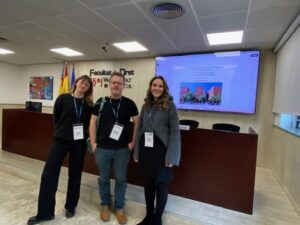
The team gained insights from the latest research by attending the 3rd annual Child Sexual Abuse Reduction Research Network conference (or CSARRN), hosted by the University of Valencia. This was attended by some of the leading voices in this area, engaged in cutting edge research from across the globe, including data scientists, linguists, criminologists, psychologists, legal researchers, and practitioners from law enforcement and civil society. My aim here is to highlight the key areas of research that pointed to the gaps, challenges and opportunities for the policing of online CSA.
The work spanned the range of offending behaviours, including the production, distribution and consumption of child sexual abuse material (CSAM), online sexual grooming, sextortion, live-streamed sexual abuse, sex trafficking, and contact sexual abuse, including the abuse of children in overseas countries. A reoccurring theme was the need to build our understanding of online CSA offenders and their behavioural patterns and profiles, particularly because there are ‘online’ offenders who display behaviours and motivations that span multiple forms of abuse. This knowledge is vital because the police are currently facing overwhelming volumes of offending, and there is a need to ensure finite law enforcement resources proactively target offenders engaged in the most serious form of abuse.
The research highlighted the potential to implement diverse policy responses to address CSAM offenders that display different behavioural and risk profiles. Key examples included a cyber offender prevention campaign that issued real-time pop-up warning notifications to deter the least-determined offenders from searching for CSAM, referrals to online self-help programmes to meet an unmet demand for help among CSAM offenders, and programmes to help convicted low-risk CSAM offenders to reintegrate back into society and prevent reoffending. Furthermore, a high proportion of images are self-generated by children and young people themselves, and require policies oriented to education and online safety – to illustrate, one study of adolescents in the U.S. found highly permissive attitudes towards the use of generative AI tools (e.g. nudification apps) to create and share sexualised images.
In law enforcement, there are critical lines to be drawn between offenders who confine their behaviour to online CSAM consumption, and those engaged in more direct forms of online or offline sexual abuse of children. Central to this are offenders involved in contact sexual abuse against children, but also the online behaviours that cause direct harm to children; examples include behaviours and strategies deployed by ‘multi-victim’ online groomers who simultaneously target high volumes of children, and those engaged in ‘sextortion’ offences to make a financial gain.
A key challenge lies in identifying which offenders are causing or present the greatest risk of harm to children and young people, due to the absence of available information on offenders’ motivations and behaviours, and difficulty in making sense of the vast amounts of data collected during investigations. For example, covert investigators can encounter high volumes of internet users engaged in grooming behaviours and need to conduct triage assessments to ensure they target offenders that are seeking to engage in contact sexual abuse (many are ‘fantasy-driven’ and restrict their behaviour to online communication). A key area of current research is the application of advanced data analytics and AI technologies to examine and make sense of large datasets that contain information on offending. This includes methodologies for producing criminal profiles that help to understand the behaviours and associated risks posed by individual offenders and online criminal networks. Key examples include a behavioural analysis of users on a communications platform to automate the detection of users engaged in cyber grooming, linguistics analysis to identify grooming behaviour from chatlog communications data, and social network analysis to understand the diverse behaviours of offenders on darknet CSAM forums.
These technologies and techniques have a key role for supporting law enforcement in their efforts to process and analyse the growing volume of data collected during investigations. This is to ensure offending can be effectively detected and assessed, essential evidence collected, and children at risk of abuse are identified and safeguarded. For example, the police commonly collect large amounts of data from suspects’ devices, and AI technology ‘trained’ on grooming communications data can help to quickly analyse large volumes of communications data to pinpoint text that is indicative of grooming. Furthermore, these techniques have a key role in assisting technology companies to detect and remove CSA from their platforms.
Finally, a team of researchers explored the physiological and psychological impact of online CSA investigation work on criminal investigators. Specialist officers experience prolonged exposure to distressing material when viewing CSAM or engaged in communication with offenders during undercover investigations. This study examined the factors that influenced officers’ stress responses, which included exposure to CSA content, but also other factors such as high workloads and the time pressures experienced in specialist CSA investigation teams. It highlighted the need to develop evidence-informed strategies and resources to protect the wellbeing of officers engaged in these investigations.
The key aim of our current SALVUS project is to produce evidence-based guidance, training and recommendations to enable safer justice outcomes in online CSA investigations. These will take a child-centred and human rights approach that prioritises the needs and rights of victims, but also the wellbeing of officers involved in these investigations. Key areas of focus are to identify best practices in investigation and the legal collection and sharing of evidence across EU jurisdictions. We are keen to engage the full range of stakeholders working in this area to enrich the project – if you work in this area and are interested in joining the practitioner network contact